Why Every Business Needs a Faster Website in 2026
In today’s digital-first world, website speed is no longer a technical luxury—it is a business necessity. A slow website directly impacts search engine rankings, user trust, conversion rates, and overall revenue. Google has officially confirmed that page speed is a ranking factor, and users expect websites to load in under three seconds.
If your website is slow, you are losing traffic, leads, and sales every single day.
What Is Website Speed Optimisation?
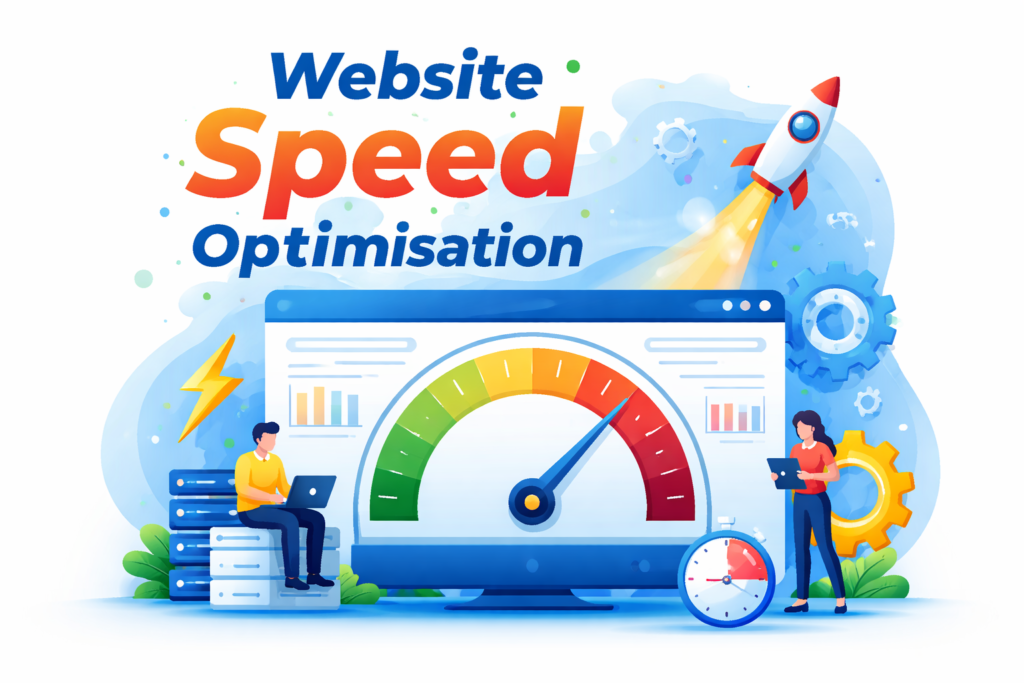
Website speed optimisation is the process of improving how fast your website loads and performs across all devices. This includes optimising images, code structure, server response time, caching, Core Web Vitals, and overall frontend and backend performance.
Speed optimisation ensures your website delivers content instantly, even on mobile networks and low-bandwidth connections.
Why Website Speed Matters for SEO
Google prioritises fast websites because they provide a better user experience. Metrics such as Largest Contentful Paint (LCP), First Input Delay (FID), and Cumulative Layout Shift (CLS) are now core ranking signals.
A slow website results in:
-
Higher bounce rates
-
Lower crawl efficiency
-
Reduced index priority
-
Poor mobile rankings
A fast website, on the other hand, gains a competitive SEO advantage.
How Website Speed Impacts Conversions
Speed directly affects user behaviour. Studies show that even a one-second delay can reduce conversions by up to 20%. Visitors associate slow websites with unprofessionalism and a lack of trust.
Optimised websites:
-
Keep users engaged longer
-
Increase form submissions and sales
-
Improve checkout completion rates
-
Build credibility and confidence
Simply put, faster websites convert better.
Common Causes of Slow Websites
Many businesses unknowingly suffer from speed issues caused by:
-
Unoptimised images and media files
-
Excessive JavaScript and CSS
-
Poor hosting infrastructure
-
No caching or CDN implementation
-
Bloated themes and plugins
Without proper optimisation, these issues silently damage performance and rankings.
Google Core Web Vitals guidelines
How WebExprt360 Improves Website Speed
At WebExprt360 – Web Expert 360, we use a data-driven approach to website speed optimisation. Our process includes:
-
Core Web Vitals optimisation
-
Image compression and lazy loading
-
Code minification and cleanup
-
Server and hosting optimisation
-
CDN and caching configuration
-
Mobile-first performance tuning
Every optimisation is measurable, tested, and aligned with Google’s performance standards.
Business Benefits of Website Speed Optimisation
Clients who invest in speed optimisation experience:
-
Higher Google rankings
-
Increased organic traffic
-
Lower bounce rates
-
Better mobile performance
-
Higher lead generation and sales
-
Stronger brand trust
Speed optimisation is one of the highest-ROI digital improvements a business can make.
Is Website Speed Optimisation Right for Your Business?
If your website:
-
Loads slowly on mobile
-
Scores low on PageSpeed Insights
-
Has high bounce rates
-
Struggles to convert visitors
Final Thoughts
Website speed is a silent growth driver. It improves SEO, enhances user experience, and increases revenue without increasing ad spend. Businesses that prioritise performance today will dominate search results tomorrow.
At WebExprt360, we help businesses build fast, scalable, and conversion-focused digital platforms designed to win.